




In the Philippines, weddings are more than just a celebration of two people getting married. They’re lively events full of old practices and customs.
The wedding processional, in particular, is very important in Filipino society and plays a big part in Catholic ceremonies. Following a certain order makes the event more solemn and important, showing respect and honor for families and significant people in the couple’s life.
Take a closer look at this detailed list of the typical order for the wedding party in a Filipino Catholic ceremony.
The Priest

In a Filipino Catholic wedding, the process starts with the priest heading down the aisle to the altar. His entrance kicks things off and sets a respectful, sacred tone for the ceremony to remind everyone that this is not just a celebration, but a spiritual union.
The Best Man and Groom
The processional often begins with the best man entering first. He is followed by the groom, who traditionally enters with his parents. However, it’s becoming more common in modern ceremonies for the groom and his parents to skip the march and instead wait at the altar.
Principal and Secondary Sponsors
After the groom come the main sponsors, a.k.a. the “ninongs” and “ninangs” and are very important to the ceremony. They are usually respected guests picked for their morals and life experiences, and they are expected to help the newlyweds throughout their marriage.
After the principal sponsors, the secondary sponsors make their entrance. These roles often include handling the symbolic elements of the ceremony: The ring bearer carries the wedding rings, the coin bearer brings the arras (wedding coins), and the Bible bearer holds the holy scripture.
Flower Girls, Bridesmaids and Groomsmen

Following the secondary sponsors, the flower girls make their way down the aisle. The bridesmaids and groomsmen usually march next, either paired together or entering separately, depending on the specific arrangements made by the couple.
The maid or matron of honor enters just before the bride, ready to assist her throughout the ceremony. This would typically involve holding her bouquet and adjusting her veil as needed.
The Bride

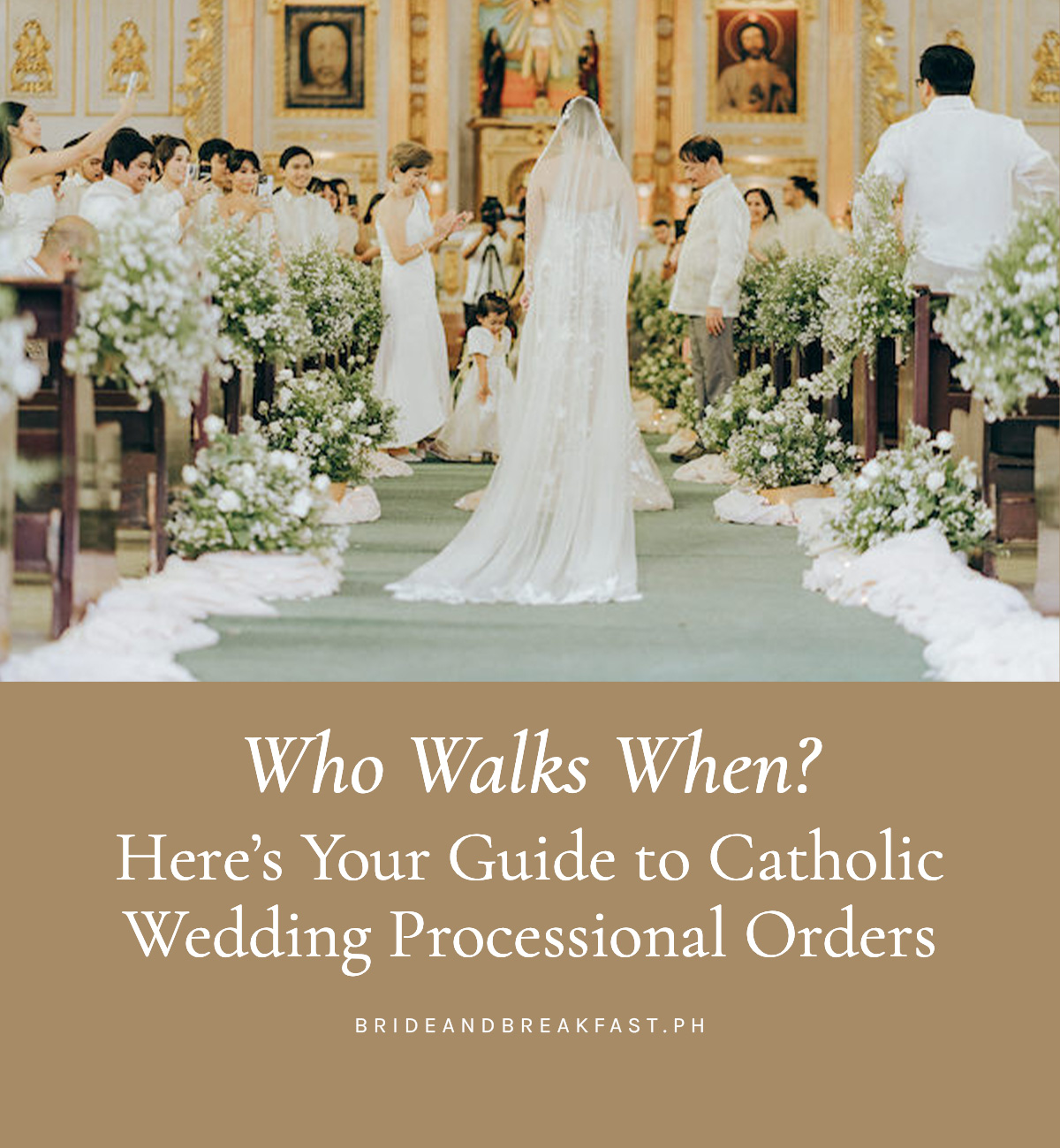
The highlight of the processional is the bride’s entrance. Traditionally, the bride walks down the aisle with her parents with her father on her left arm, symbolizing that he is about to give her hand in marriage. However, many modern weddings see the bride making a solo entrance halfway down the aisle, where she is then joined by her parents to complete the march together.
Know that while the traditional order is still widely observed, variations occur, often influenced by personal preferences, family dynamics, and the physical layout of the wedding venue. Some couples choose to omit members from the procession, or they may adjust the sequence to better reflect their personal values and relationships.
Always remember, it’s best to consult with your chosen church to confirm the specific traditions and requirements for your wedding ceremony, as practices can vary by parish.